
Breast · Surgery
Upper and lower eyelid lift (blepharoplasty)
Correction of excess lid skin and tear troughs — often functional with visual field restriction.
Is this treatment right for me?
Overview
Upper lid tightening and/or lower lid correction (transconjunctival or subciliary).
For whom?
Upper lid tightening and/or lower lid correction (transconjunctival or subciliary).
How the treatment works
Method
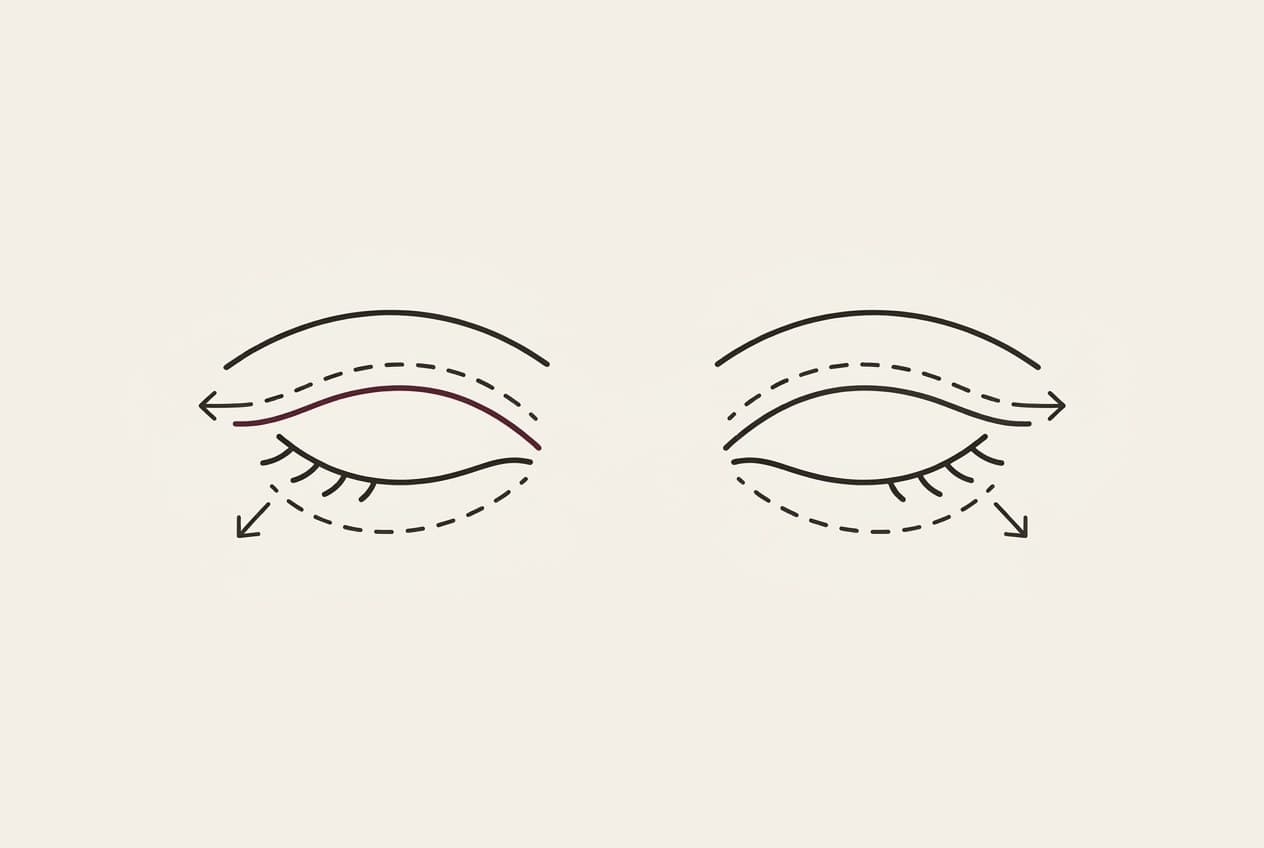
Upper lid tightening and/or lower lid correction (transconjunctival or subciliary).
Process
- Consultation
Upper lid tightening and/or lower lid correction (transconjunctival or subciliary).
- Surgery
Upper lid tightening and/or lower lid correction (transconjunctival or subciliary).
- Aftercare
Upper lid tightening and/or lower lid correction (transconjunctival or subciliary).
Anaesthesia
Upper lid tightening and/or lower lid correction (transconjunctival or subciliary).
What to expect afterwards
Risks & complications
Every surgical procedure carries risks. Possible complications include:
- Bleeding (haematoma) with possible revision surgery
- Wound infection
- Impaired wound healing, especially in smokers
- Thrombosis/embolism
- Spreading or hypertrophic scars
- Dry eye, foreign body sensation (mostly temporary)
- Lagophthalmus (incomplete closure)
- Lid crease asymmetry
- Rarely: visual impairment/globe injury
Risks and complications are stated in full — they are part of every honest consultation.
Recovery
- Upper lid tightening and/or lower lid correction (transconjunctival or subciliary).
- Upper lid tightening and/or lower lid correction (transconjunctival or subciliary).
- Upper lid tightening and/or lower lid correction (transconjunctival or subciliary).
Before your decision
FAQ
Are scars visible?
When is the result stable?
Costs
The price is determined in a personal consultation.